Preparing for Your Abdominal Ultrasound: A Gentle Clinical Guide
When your healthcare provider recommends an abdominal ultrasound, knowing exactly what to do beforehand eliminates guesswork and produces the clearest possible diagnostic images. Ultrasound imaging relies on high frequency sound waves rather than ionizing radiation. Because sound waves travel differently through solid organs, fluids, and gas, following a few straightforward preparation steps helps our registered sonographers capture sharp, detailed views of your internal anatomy.
Why Fasting Matters Before an Abdominal Scan
The single most important preparation rule for an upper abdominal examination is fasting. Patients are typically asked to refrain from eating solid food, drinking coffee, and consuming carbonated beverages for six to eight hours prior to their appointment time. While fasting can feel slightly inconvenient, there are two important physiological reasons why it is necessary:
- Optimal Gallbladder Distension: When you consume any food containing dietary fats or proteins, your digestive system signals the gallbladder to contract and release stored bile. An empty stomach keeps the gallbladder naturally filled and distended like a small water balloon, allowing our sonographers to evaluate gallbladder walls and detect gallstones or sludge.
- Minimizing Intestinal Gas Interference: Digestion naturally produces gas in the stomach and small intestine. Because ultrasound sound waves cannot penetrate air pockets, intestinal gas creates acoustic shadows that obscure deeper organs like the pancreas and abdominal aorta. Fasting calms the digestive tract, clearing an unobstructed acoustic pathway.
Can You Drink Water Before Your Scan?
In most situations, drinking small sips of plain water to stay comfortable or take prescribed medications is entirely permissible. However, avoid large gulps of water right before walking into the examination room unless your specific scan includes a pelvic or renal protocol that requires a full bladder. Always take essential daily prescription medications as directed by your physician unless explicitly told otherwise.
What Happens During the Ultrasound Appointment?
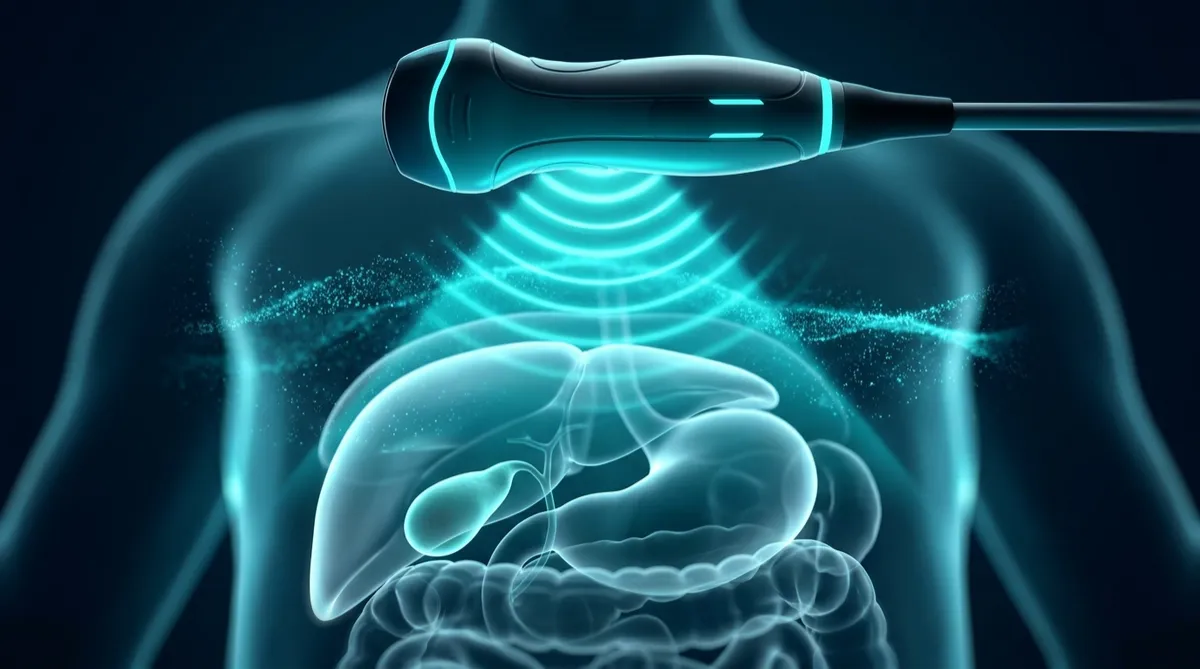
Upon arriving at our boutique diagnostic suite, you will be welcomed into a private, climate controlled examination room. Our registered sonographer will review your history, explain each step, and ensure your complete comfort. You will lie comfortably on a cushioned examination table while a warm, water soluble acoustic gel is applied to your abdomen. The gel eliminates tiny air pockets between your skin and the handheld transducer probe.
As the transducer glides gently over your abdomen, real time cross sectional images appear on the high definition monitor. The sonographer may ask you to take a deep breath and hold it for a few seconds. This simple maneuver pushes your diaphragm downward, shifting the liver and spleen below your rib cage so they can be examined thoroughly. The entire exam takes approximately thirty to forty minutes, causes zero pain, and involves no radiation exposure whatsoever.
Prompt Clinical Reporting and Physician Review
Once your examination is complete, all recorded video clips, color Doppler measurements, and diagnostic frames are reviewed by Board Certified Radiologists. A complete, formal diagnostic report is completed within twenty four to forty eight hours, giving both you and your ordering physician reliable clarity.
Medical Disclaimer: This guide is provided for educational and patient preparation purposes only and does not substitute for emergency medical care. If you experience severe sudden abdominal pain, continuous vomiting, or high fever, please seek immediate evaluation at the nearest emergency department.
